

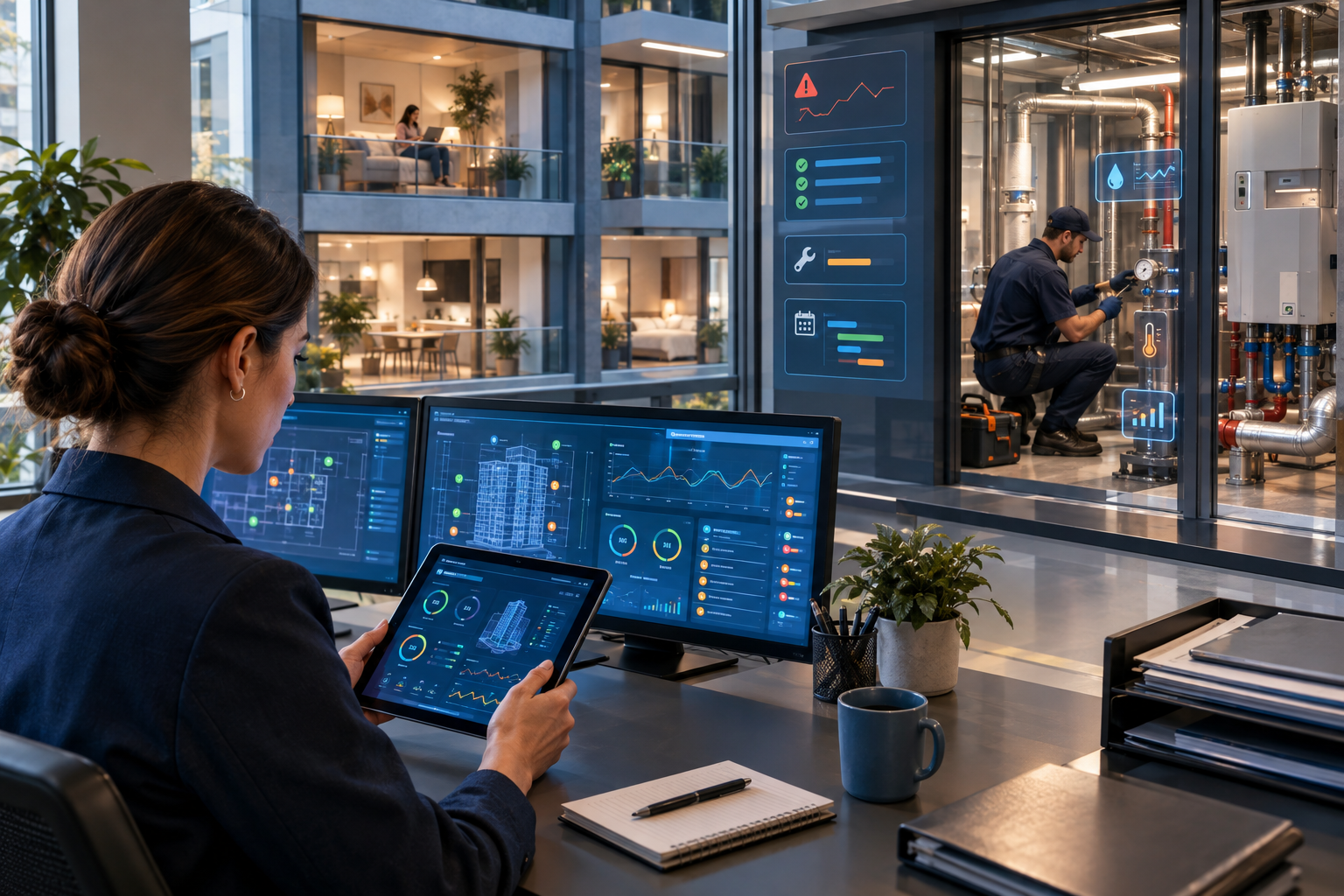
How AI Can Help Property Managers Prevent Costly Maintenance Problems
AI can help property managers detect unusual equipment or utility patterns, prioritize maintenance requests, analyze repair records and costs, improve tenant communication, and coordinate contractors. These tools may support earlier investigations, budgeting, workflow management, and more consistent oversight, but they do not replace inspections, emergency procedures, or qualified professionals.
A practical strategy begins with one recurring maintenance challenge, establishes a baseline, and measures results before expanding. Managers should verify AI recommendations, protect property and tenant data, maintain human review, and assess contractor qualifications and work quality.
Property maintenance is one of the most demanding responsibilities for landlords and property managers. A small leak, a malfunctioning heating system, or a delayed repair can quickly become an expensive problem if it goes unnoticed.
Artificial intelligence is creating new ways to organize maintenance requests, recognize patterns, and help property teams respond more efficiently. While AI cannot eliminate every repair or replace qualified technicians, it can support better planning and more informed decisions.

1. Identify Potential Problems Earlier
Property managers often handle maintenance across multiple units or buildings. Tracking every issue manually can make it difficult to notice recurring problems.
When connected to suitable sensors and building systems, AI-powered tools can help identify unusual patterns, such as unexpected water usage or changes in equipment performance.
These signals may indicate a problem that deserves inspection.Early alerts do not guarantee that a failure will be prevented, but they can help managers investigate before a minor issue becomes more serious.
2. Prioritize Maintenance Requests
Not every maintenance request has the same urgency. A major water leak requires a different response from a loose cabinet handle.
AI-assisted systems can help categorize incoming requests using information about the reported problem, its location, and its potential impact. Managers can then review the information and assign appropriate priorities.Safety hazards and urgent repairs should always receive suitable human attention. Automated prioritization should support established emergency procedures rather than replace them.
3. Make Better Use of Maintenance Budgets
Unexpected repairs can disrupt a property’s operating budget. AI tools may help managers analyze previous maintenance records, repair costs, equipment age, and recurring service requests.
These insights can support budgeting and help teams identify assets that may require more frequent attention. Managers can use this information to compare repair options, plan inspections, and discuss preventive maintenance with qualified service providers.
Predictions are only as reliable as the data behind them, so recommendations should be checked against actual property conditions.
4. Improve Communication With Tenants
Tenants want to know that their maintenance requests have been received and that someone is addressing the problem.
AI-assisted communication tools can acknowledge requests, collect relevant details, provide status updates, and direct routine questions to the appropriate team. This can reduce repetitive administrative work and help prevent requests from being overlooked.
Property managers should still provide a clear way for tenants to contact a real person, particularly when a repair affects safety, accessibility, or essential services.
5. Coordinate Contractors More Efficiently
Managing multiple contractors can be challenging when teams oversee several properties. AI-supported workflows can organize work orders, record appointment details, track outstanding tasks, and remind staff when follow-up is required.
A centralized maintenance history also helps managers understand which repairs have been completed and which issues continue to return.
Contractor qualifications, insurance, pricing, and the quality of completed work still require appropriate verification. Technology can simplify coordination, but it cannot guarantee the quality of a service provider.
6. Use Property Data Responsibly
Maintenance systems may collect information about buildings, equipment, tenants, and service activity. Property managers should understand what data their tools collect and who can access it.
Choose solutions with appropriate access controls, clear data policies, and reliable recordkeeping. Avoid collecting unnecessary personal information, and ensure that automated decisions can be reviewed by responsible staff.
Good data practices help build trust with tenants while supporting more consistent property operations.
Building a Practical AI Maintenance Strategy
Property managers do not need to automate every process at once. A sensible starting point is to identify one recurring challenge, such as missed maintenance requests or difficulty tracking contractor follow-ups.
Next, establish a baseline using existing records, test an appropriate tool, and measure whether it improves response times, administrative workload, or maintenance visibility. Expand only when the results justify the investment.
For portfolios with multiple properties, consistent processes and accurate records can make it easier to identify recurring issues and allocate resources effectively.
Conclusion
AI can help property managers organize maintenance requests, recognize potential risks, plan budgets, and communicate more consistently with tenants. Its greatest value comes from combining useful data and automation with professional inspections, qualified contractors, and sound management decisions.
HomeManageAI focuses on smarter property management through technology, helping property owners and managers explore ways to streamline operations and improve oversight.
Learn more at https://homemanageai.com.